Investment Casting vs Sand Casting: Which Process Is Right?
Selecting the right casting process affects dimensional accuracy, surface finish, geometry, production planning and the amount of secondary machining required. Investment casting and sand casting are both established metal-forming processes, but they are suited to different engineering and commercial requirements.
What Is Investment Casting?
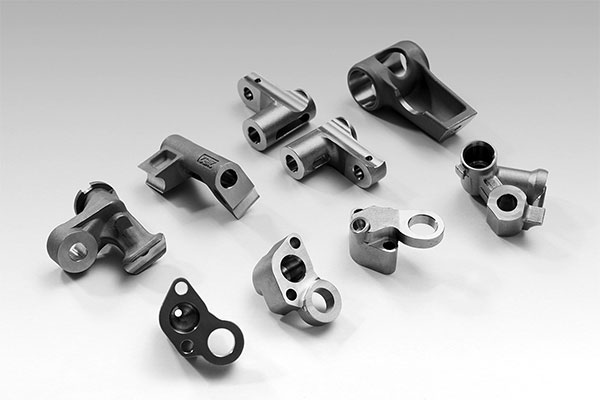
Investment casting uses a detailed expendable pattern that is coated with refractory material to create a ceramic mould. After the pattern is removed, molten metal is poured into the mould. The process is well suited to components with complex shapes, finer details and tighter dimensional requirements.
Because the mould reproduces the pattern closely, investment casting can reduce the amount of machining needed on certain features. It is commonly considered when designers need complex geometry, thin sections or a smoother as-cast surface.
What Is Sand Casting?
Sand casting forms a mould from compacted sand around a pattern. Once the pattern is removed, the cavity is filled with molten metal. It is a versatile process that can accommodate a wide range of part sizes and materials, and tooling can be comparatively straightforward for suitable applications.
Sand casting is often attractive for larger components, lower-volume requirements and designs where extremely fine surface finish is not the primary objective.
Key Differences to Consider
- Dimensional accuracy: Investment casting generally supports finer detail and closer as-cast dimensions, while sand cast parts may require more machining where tight tolerances are needed.
- Surface finish: Investment casting typically provides a smoother surface. Sand casting naturally produces a more textured finish.
- Part complexity: Intricate passages, thin walls and detailed geometry can favour investment casting.
- Part size: Sand casting is commonly used across a very broad size range and can be practical for larger components.
- Tooling and volume: The best choice depends on quantity, geometry, material and total manufacturing route rather than a single cost factor.
How to Make the Right Selection
Start with the drawing and identify critical dimensions, surface requirements, annual quantity, material grade and any features that are expensive to machine. A manufacturing partner can then assess whether the geometry is better suited to investment casting, sand casting or another process.
Vertex Industries Inc supports industrial requirements across casting and machining services. Sharing a drawing, material specification and expected quantity helps create a more accurate process recommendation.
Have a Casting Requirement?
Send your component drawing or requirement to discuss a suitable manufacturing route.
Request a Quote